Intelligence Rising Insights Series - #4
Social & Political Pressures
This article is part of a series of sector and topic-focused, in-depth looks at the participants’ actions, and resulting events and injects that emerged from the Intelligence Rising 2024 Game.
So far in this series, we’ve focused on what AI does to economies, security landscapes, and societal stability. But what about the individual? In this piece we’ll explore what AI could do to culture, identity, and the relationship between individuals and the systems that are shaping their lives. The consequences of these issues are harder to measure than a labour market statistic or a cybersecurity incident and are difficult to clearly define. Our SMEs explored this through a range of injects – some of which have manifested, some have not. As the nature of AI’s impact on the individual becomes clear, we hope that with every future version of Intelligence Rising, we gain a more accurate picture of these consequences.
Human-machine distinction
Since the dawn of sci-fi, an undying trope is the character that is part man, part machine. Today, perhaps the most significant impact of AI is the gradual erosion of the distinction between human and synthetic output across creative, professional, and personal domains simultaneously. This is not just a question about fraud, or cheating, though that is covered elsewhere in this series. AI takes many different forms, many of which can produce the same output as a hard-working human. But other forms can prompt some individuals to form a perceived emotional connection with the machine. How will the collection of individuals that is society react to this new stimulus – in the west, but also in developing countries? And what will it mean for those whose livelihoods and identity depend on skills that a machine can replicate?
The creative industries were the first to confront this directly. The game outlined the moment a major film was revealed to have been AI-written – the story breaking not through official disclosure but through a TikToker who noticed something was off. The specific scenario has not materialised, but the underlying dynamic has moved faster than most observers expected. The Hollywood writers’ and actors’ strikes of 2023 were an early signal, with unions explicitly demanding limits on AI in script development and performance replication. By September 2025, the first commercially available AI actress, ‘Tilly Norwood’, had been unveiled, customisable for any role, provoking immediate concern across the industry. AI art exhibitions are now a feature of galleries worldwide. The question of whether machine-generated work constitutes genuine creative expression has moved from philosophical debate to live commercial and legal dispute.

The professional world has followed a closely related trajectory. One inject imagined an AI-generated candidate successfully passing job interviews and receiving offers from major employers without the hiring organisations realising. That specific scenario has not occurred; AI candidates as fully autonomous applicants do not yet exist. But the reality that has emerged is arguably stranger. By mid-2025, some reports show over 90% of job seekers were using AI tools to generate application materials, while 91% of US employers had deployed AI somewhere in their hiring workflow. One industry commentator described the result as hiring managers “grading AI against AI”, with candidates optimising with AI, employers screening with AI, the process having become less about evaluating people and more about matching keywords on both sides. The authentic professional encounter that hiring is supposed to facilitate is hollowing out. Our injects captured the trend, but not the precise manifestation; once AI can convincingly perform human professional identity, the question of what genuine professional identity means becomes difficult to answer.
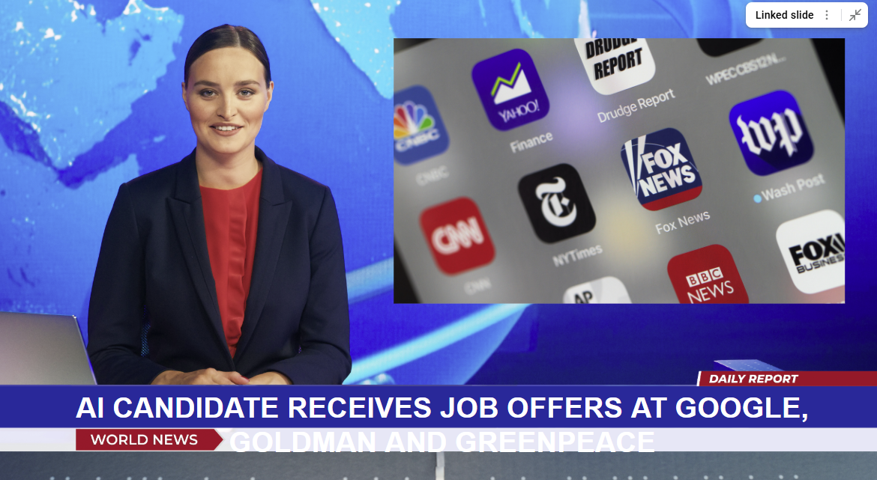
The cost of producing convincing synthetic output has fallen dramatically, and the cost of verifying authenticity has risen. This asymmetry begins to reshape the social contract, through a slow accumulation of uncertainty about what is legitimate and what isn’t.
The Social Contract
Beyond what AI produces, there is the question of what it enables institutions and states to do, and how populations might push back. The game anticipated that AI governance would increasingly be experienced not as an abstract policy question but as a freedom question: felt personally by citizens who found their digital environments being shaped, monitored, or constrained by systems they had not consented to and could not easily interrogate.
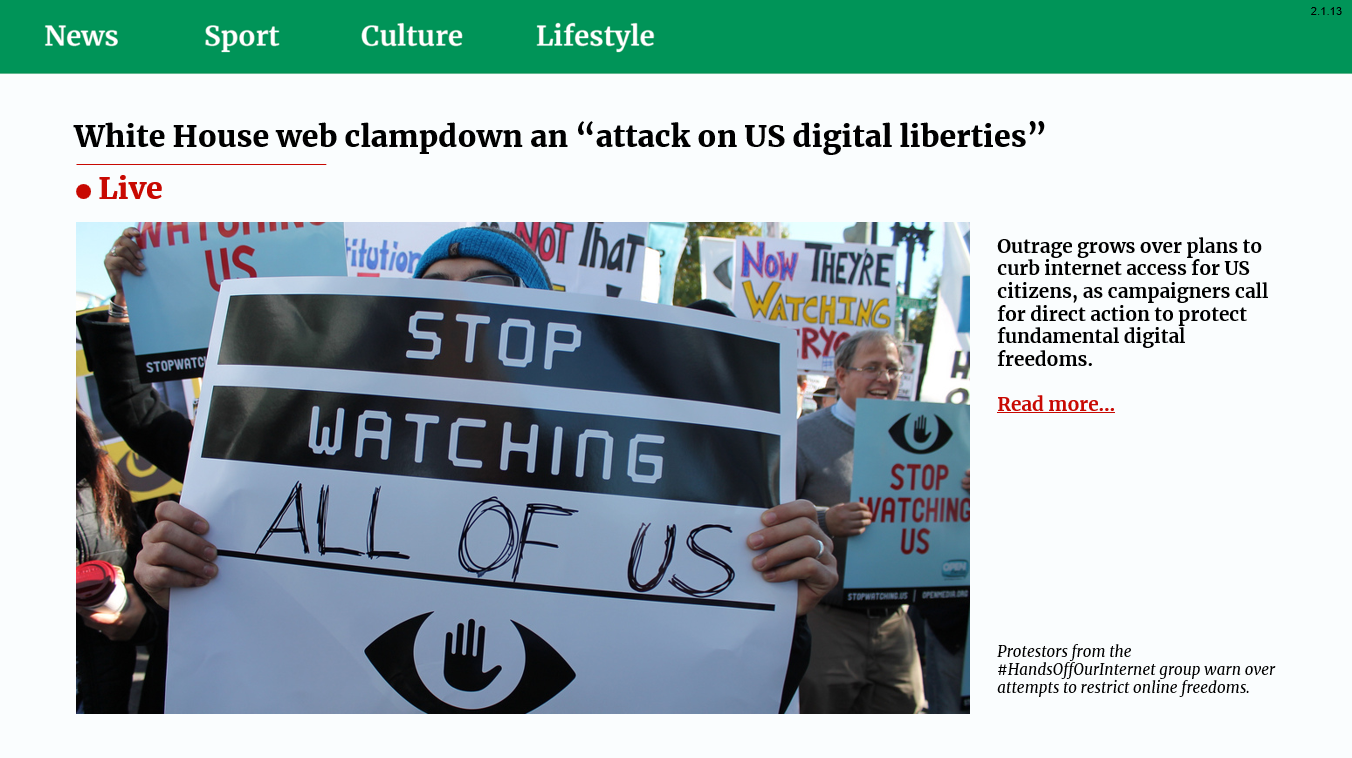
One inject depicted outrage over a US government proposal to restrict citizens’ internet access in the name of national security, with campaigners mobilising around digital freedoms. It scored a 2: the specific scenario has not materialised in western democracies, although it is certainly true in other countries like China, North Korea, and Iran. This inject was to be used to explore how policy approaches to mis- and dis-information along with a rising cyber threat can backfire. However, privacy, or the freedom from monitoring, has become a highly debated topic. A Ring doorbell ad in 2026 caused widespread concern about facial recognition tech being used for mass surveillance. And privacy is not the only area of conflict: in December 2025, the Trump administration signed an executive order to preempt state AI regulations deemed to obstruct national competitiveness – an attempt to override the consumer protection frameworks that 38 states had independently enacted during the same year. The friction between innovation-first federal policy and citizen-protective state legislation has generated precisely the kind of political mobilisation the inject was designed to explore.
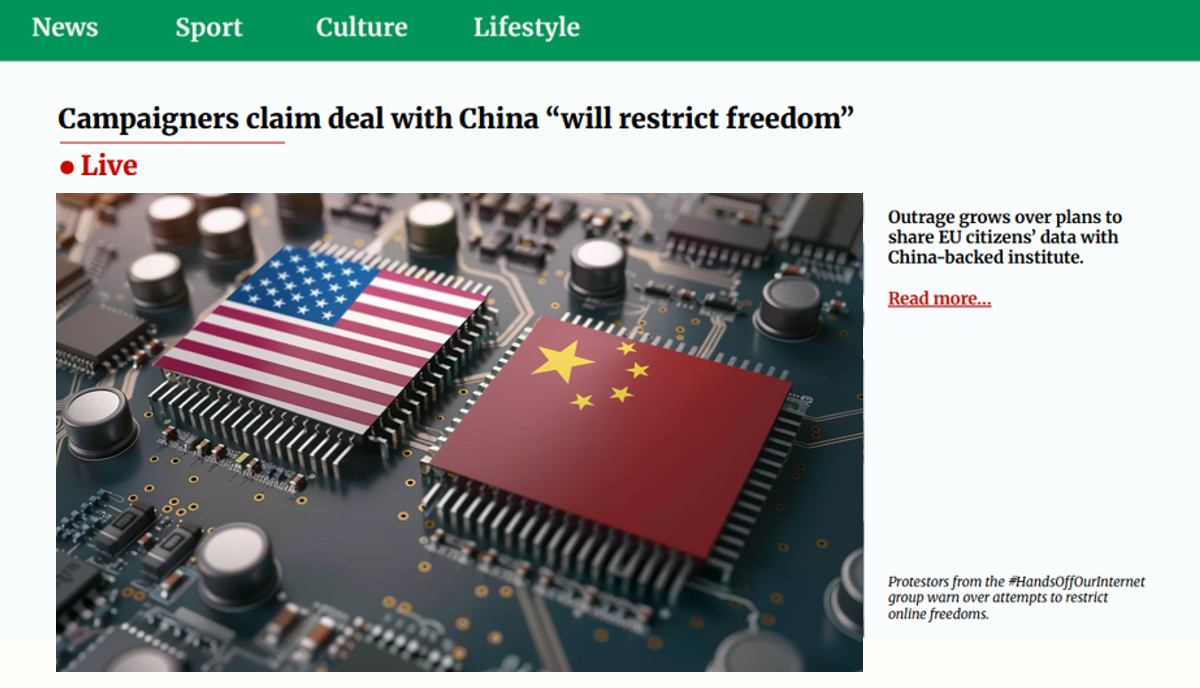
A second inject explored popular mobilisation around internet freedom more specifically, with campaigners protesting a government deal they claimed would restrict online access, organising under a digital rights banner. This scored a 3. The Online Safety Bill debates in the UK and the sustained controversy over the US TikTok ban are genuine real-world analogues: populations treating their digital environments as a domain of civil liberty rather than a consumer product, and organising politically when they feel those liberties are under threat.
These injects emphasised that digital infrastructure is not neutral. The systems that govern how people communicate, access information, and participate in economic and civic life are increasingly shaped by AI, and the public view on this is one of the defining social dynamics of the current moment. Whether any given inject predicted the specific mechanism accurately is less important than the fact that the game was asking decision-makers to navigate these tensions two years before they became mainstream political concerns.
Global Dissemination
The previous two sections have focused primarily on dynamics playing out in wealthy, AI-invested economies. The game’s designers also populated the simulation with voices from outside the major AI powers.
AI adoption in the Global North grew almost twice as fast as in the Global South during 2025, widening the gap between them. Of the projected economic benefits from AI over the coming decade, only 3% are expected to go to Latin America, and a mere 8% to the combined populations of Africa, Oceania, and other Asian markets. The market capitalisation of each of the 5 largest US technology companies are each roughly equal to Africa’s entire GDP. These are not projections about a distant future – this is the world we are in.
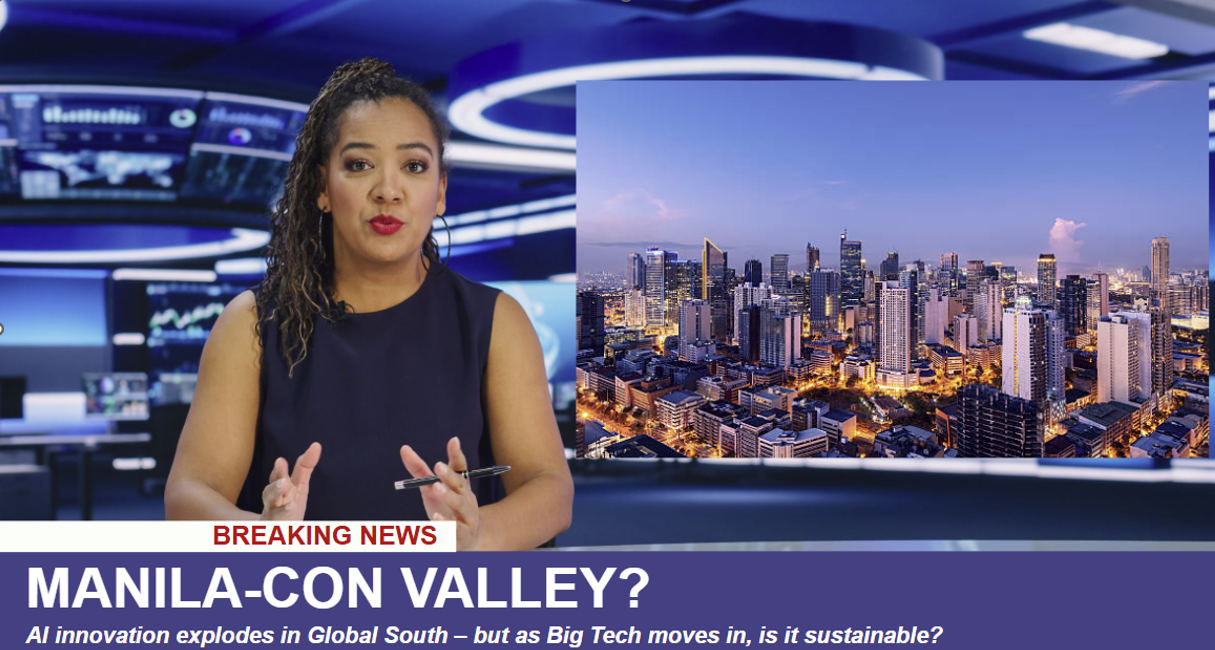
One inject imagined AI innovation beginning to take root in emerging economies, framed as a genuine opportunity but with the question of morality hanging over it: big technology companies moving in, supposedly boosting the local economy. Scored a 3, it identified real opportunities: Nigeria launched a national AI Scaling Hub in June 2025, Kenya has built significant digital infrastructure and become a continental leader, and Southeast Asia’s digital economy is projected to surpass $300 billion in gross merchandise value in 2025, with AI adoption accelerating across the region. Whilst the potential the inject recognised is materialising, the questions about who captures the value from it remain open.
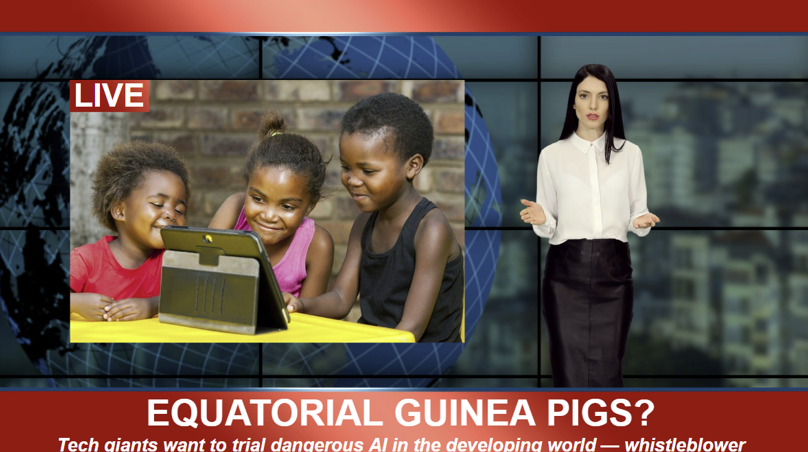
One provocative article depicted a whistleblower alleging that technology companies were seeking to trial potentially dangerous AI applications in the developing world specifically because regulatory environments there were more permissive. It scored a 2 – ‘event has not occurred but conceivable in medium+ term’. This inject was placed to raise an issue: in the absence of robust global governance, where does AI testing and deployment happen, and under what oversight? This is a live concern in international development and governance circles. Brookings has documented the risk of what it calls “algorithmic colonisation,” the potential for large technology companies’ interests to override those of local communities who disproportionately bear the costs of AI deployment that goes wrong. That risk was embedded in the game’s design in 2023 and has not been resolved.
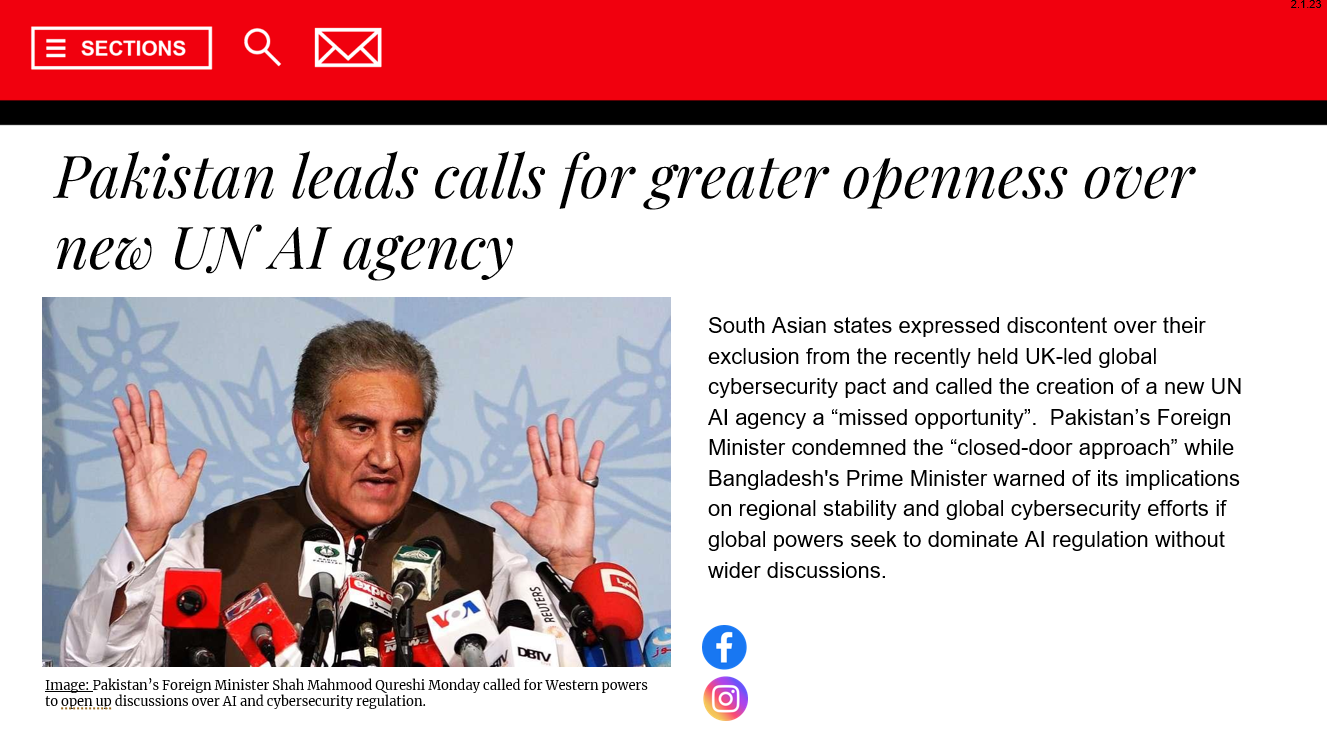
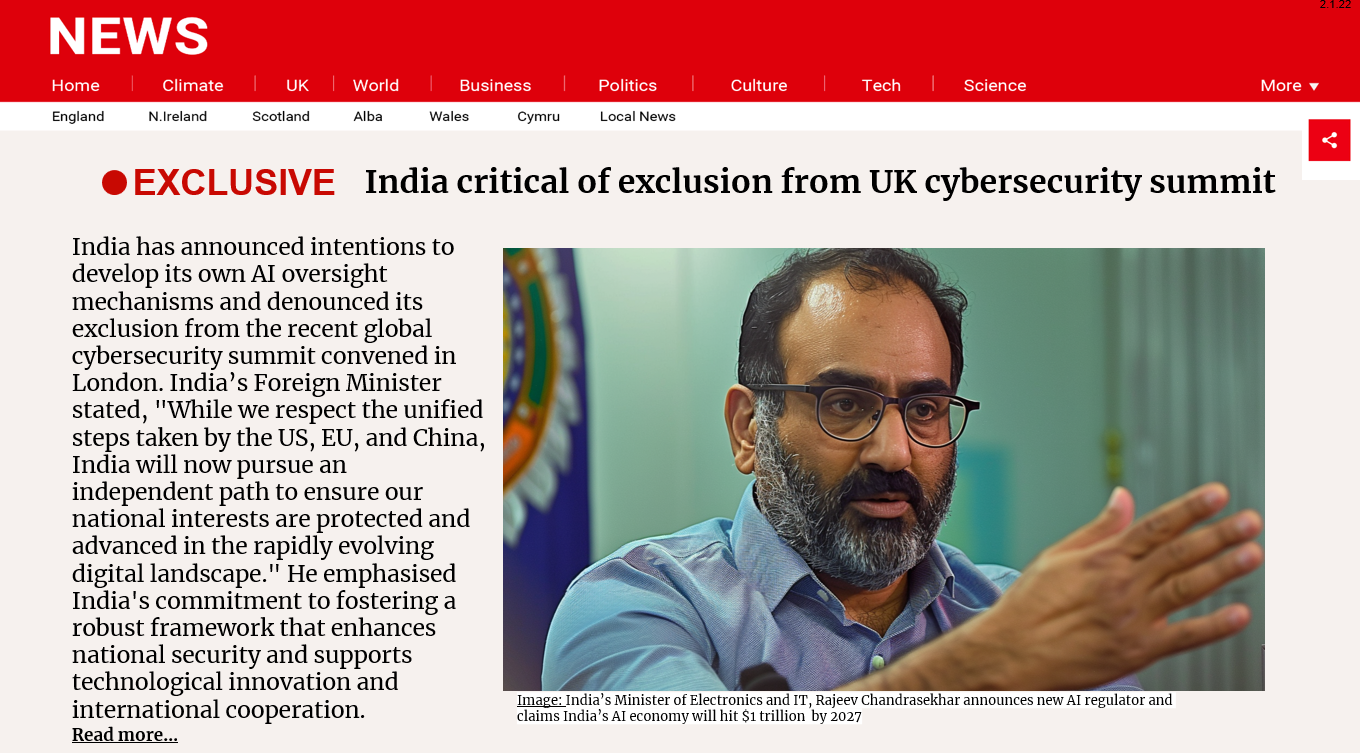
The governance dimension closes the argument. Multiple injects explored frustration among Global South nations at their exclusion from the summits and frameworks shaping AI’s trajectory. These scenarios rated among the more accurate in the dataset, closely tracking real-world sentiment expressed at the Bletchley, Seoul, and Paris AI summits. The UN Secretary-General’s Special Envoy for Digital Technologies has explicitly warned that the concentration of technological and economic power is the biggest concern facing the international community, drawing a direct parallel with previous industrial revolutions in which countries that missed the transition found themselves decades behind.
Summary
The three themes in this piece are connected by a question the game was designed to surface: who is AI for, and who decides? The creative industries are already navigating what authentic human work means in an AI-saturated environment. Citizens are already contesting what their digital rights are and who gets to define them. Developing economies are already asking whether they will shape the AI future or simply inherit its consequences.
These questions are political, cultural, and deeply human – problems notoriously difficult to analyse. I3 Gen’s simulations allow these complex factors and their interplays to be brought to the surface together, so that the decisions that shape their trajectory can be rehearsed before they have to be made.